The Chase
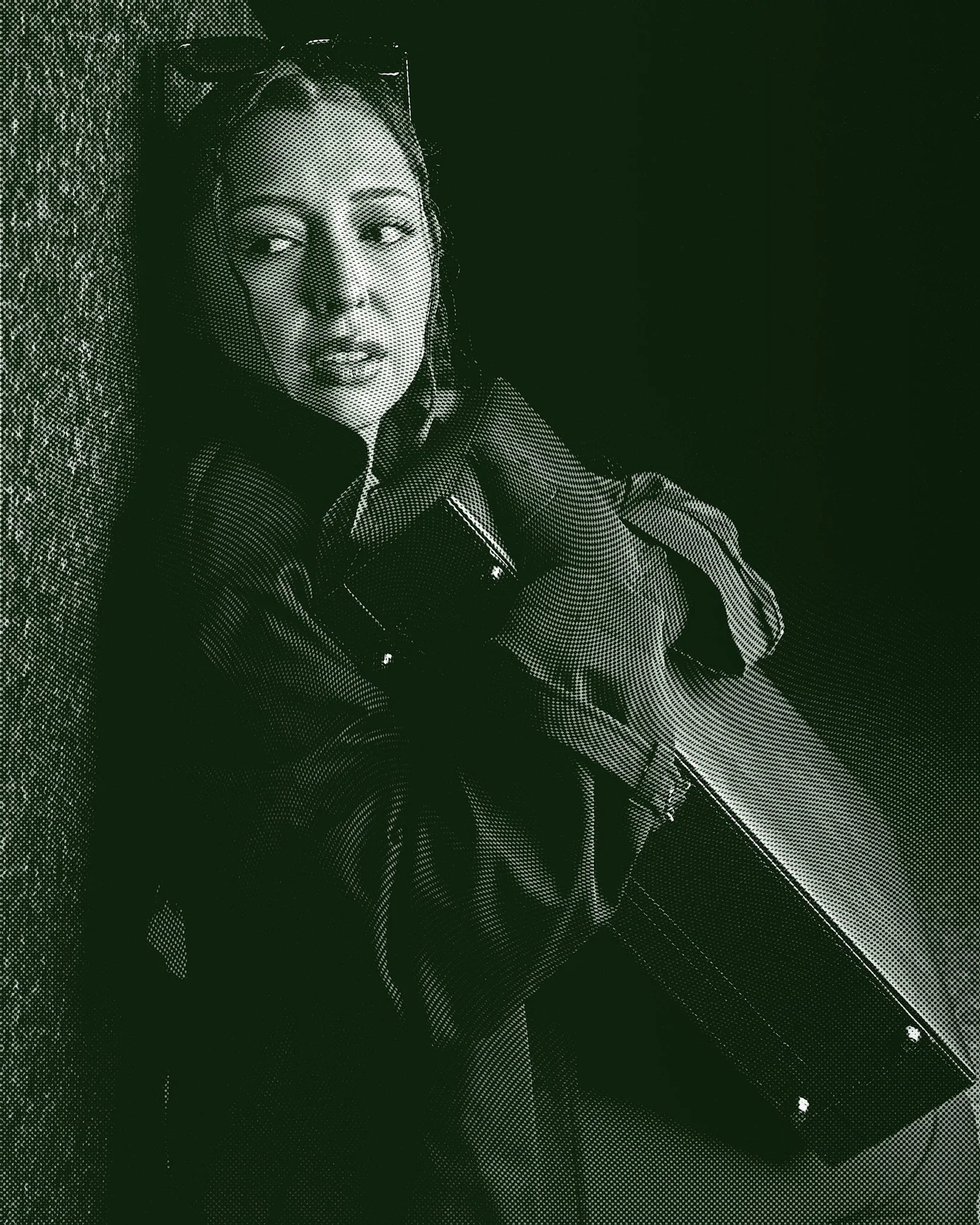
Momentum. The series opens already in motion — she is going somewhere and something is behind her. Everything here is about direction of travel, so the frames are built around lines that pull across the image rather than settle in it.
Case study · Editorial
A lone thief in a red dress escaping across Los Angeles, told in three acts. I wrote the structure before I photographed a frame of it, which is the whole reason it's the piece I show first.
The idea
Most fashion and editorial series are a mood: a look, a location, variations on a feeling. That's a legitimate way to work and I do it too. But I wanted to know whether a photo series could carry a story — cause and effect, a turn in the middle, a resolution you feel rather than read.
So I built it the way I'd build a script. A protagonist with a want. An inciting action already in the past — she has taken something and she is leaving. Three movements. And a closing line that reframes everything before it.
"She doesn't look like she ran. She looks like she won."
Structure
Momentum. The series opens already in motion — she is going somewhere and something is behind her. Everything here is about direction of travel, so the frames are built around lines that pull across the image rather than settle in it.
The turn. She stops. In a script this is the midpoint where the character stops reacting and starts choosing; here it's the point where the light softens and she takes up the centre of the frame instead of cutting across it.
The payoff, and the line the series ends on. She isn't fleeing any more, she's arrived — composed, unbothered, in possession. The point of the act break is that you only understand Act I properly once you've seen this.
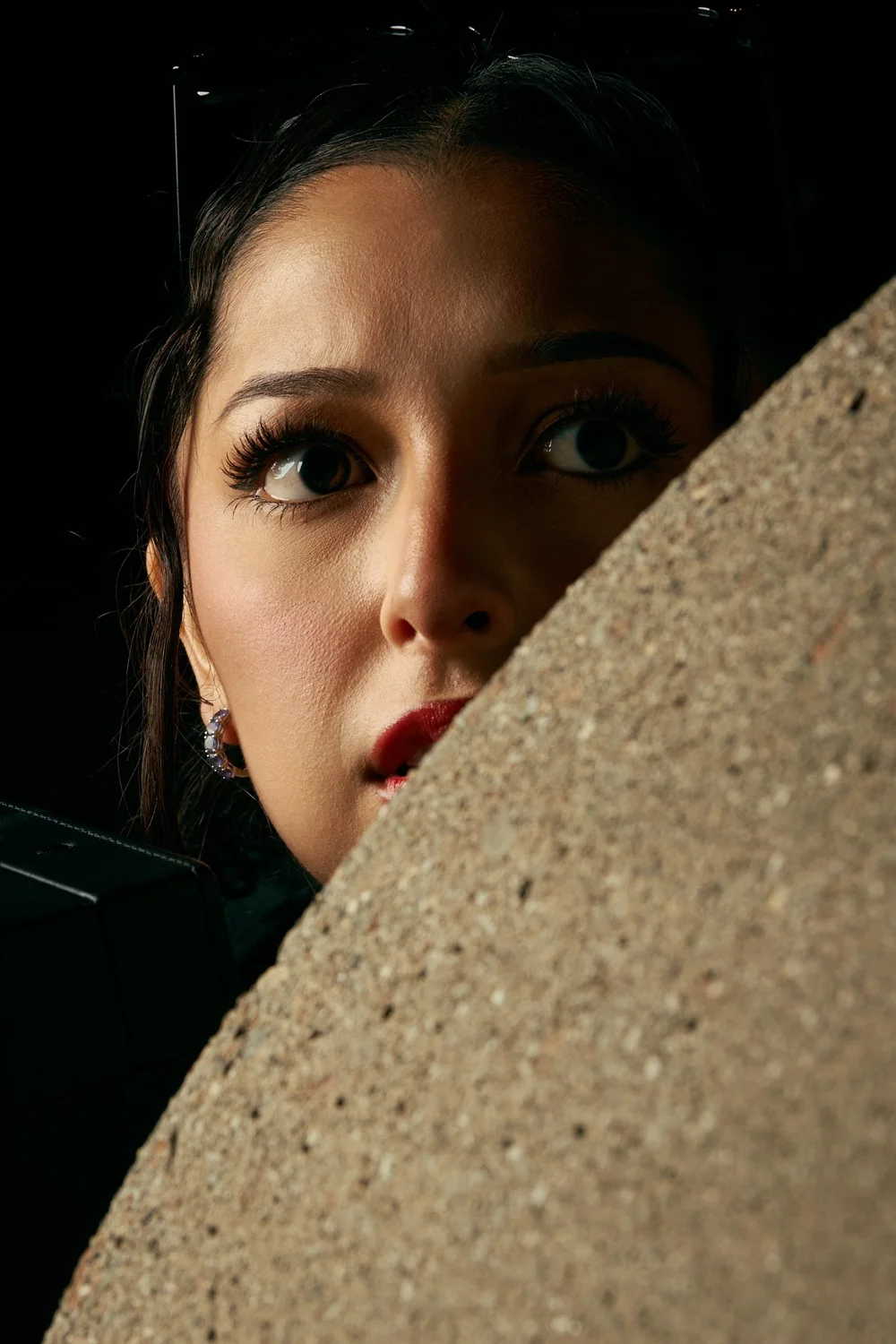
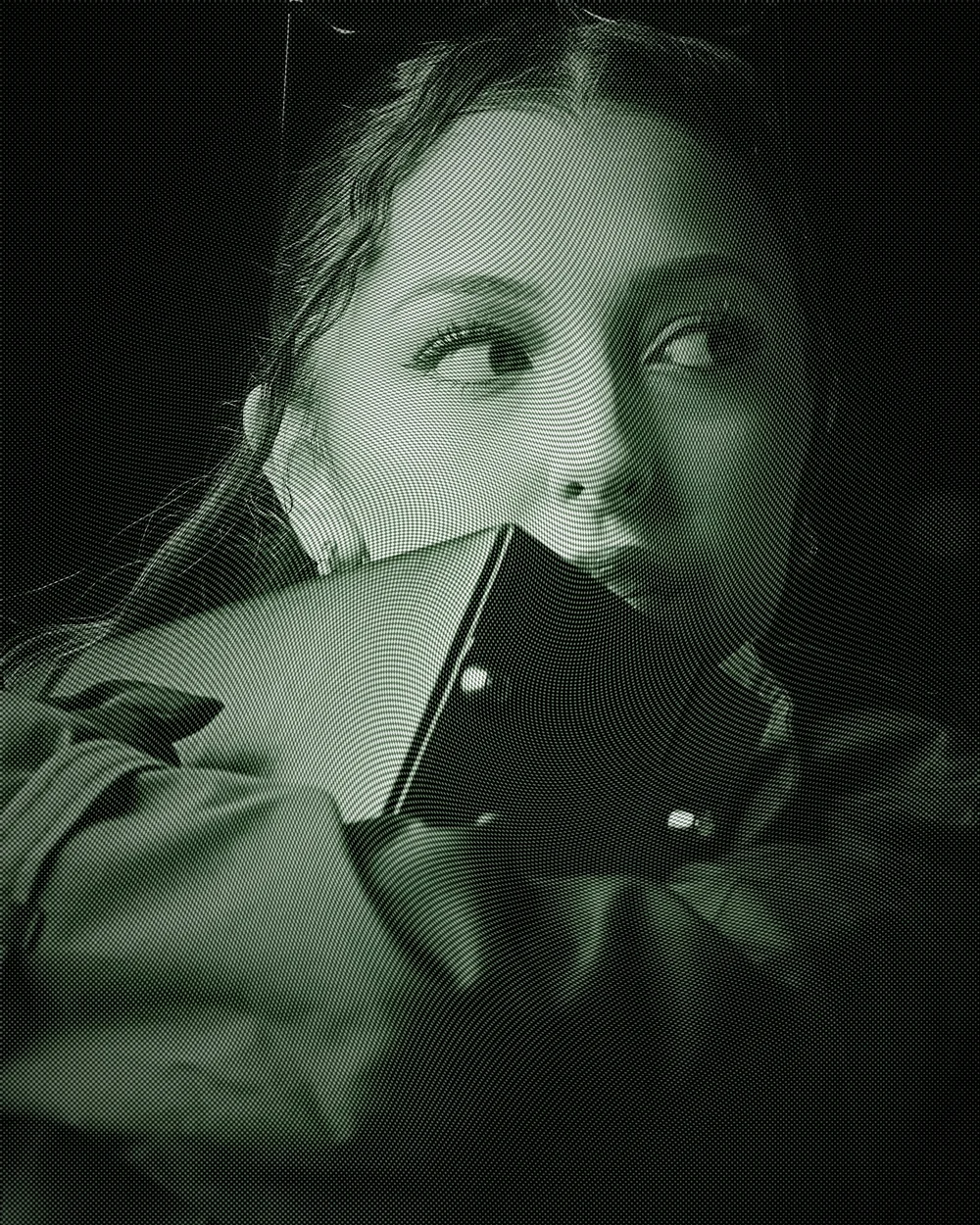
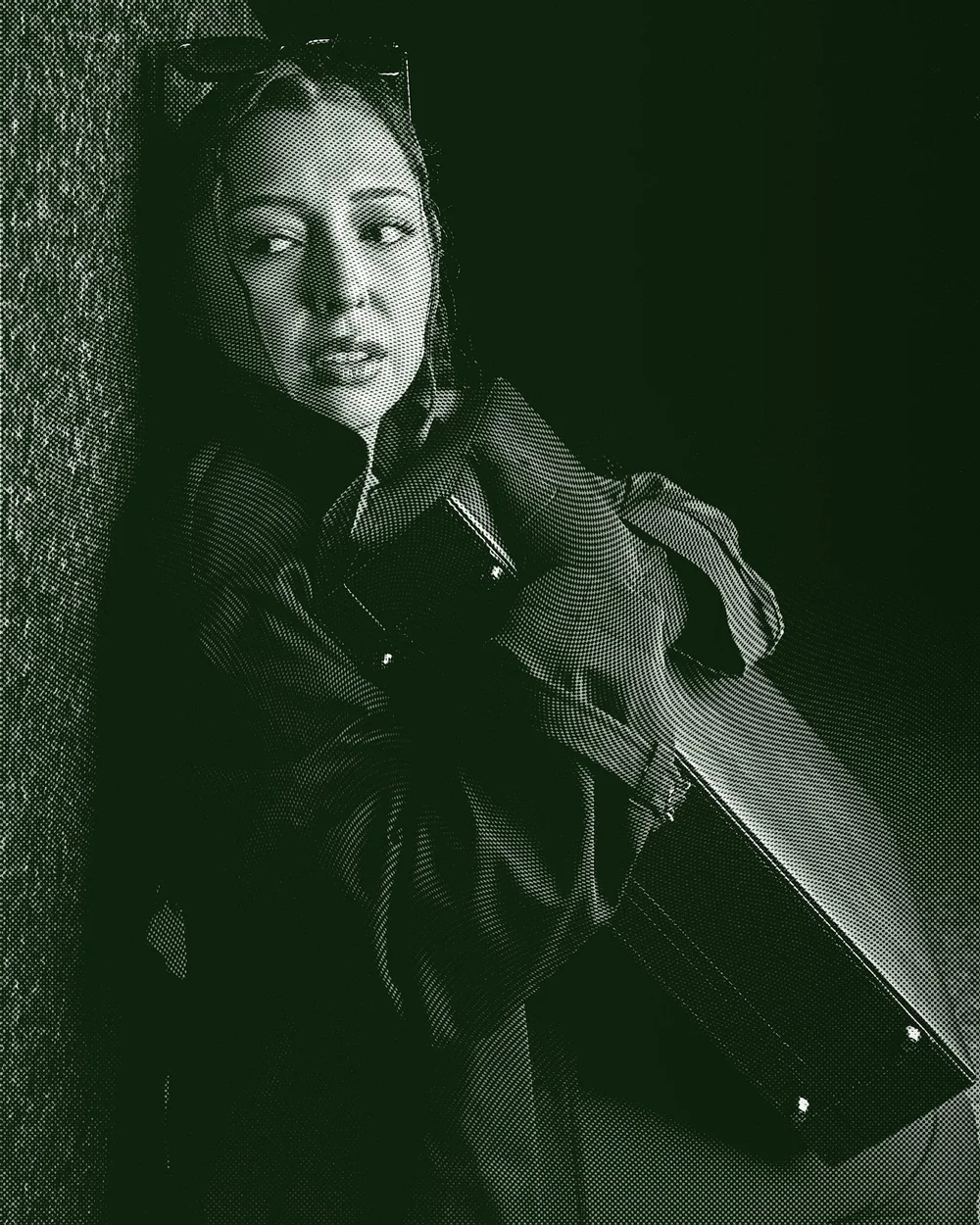
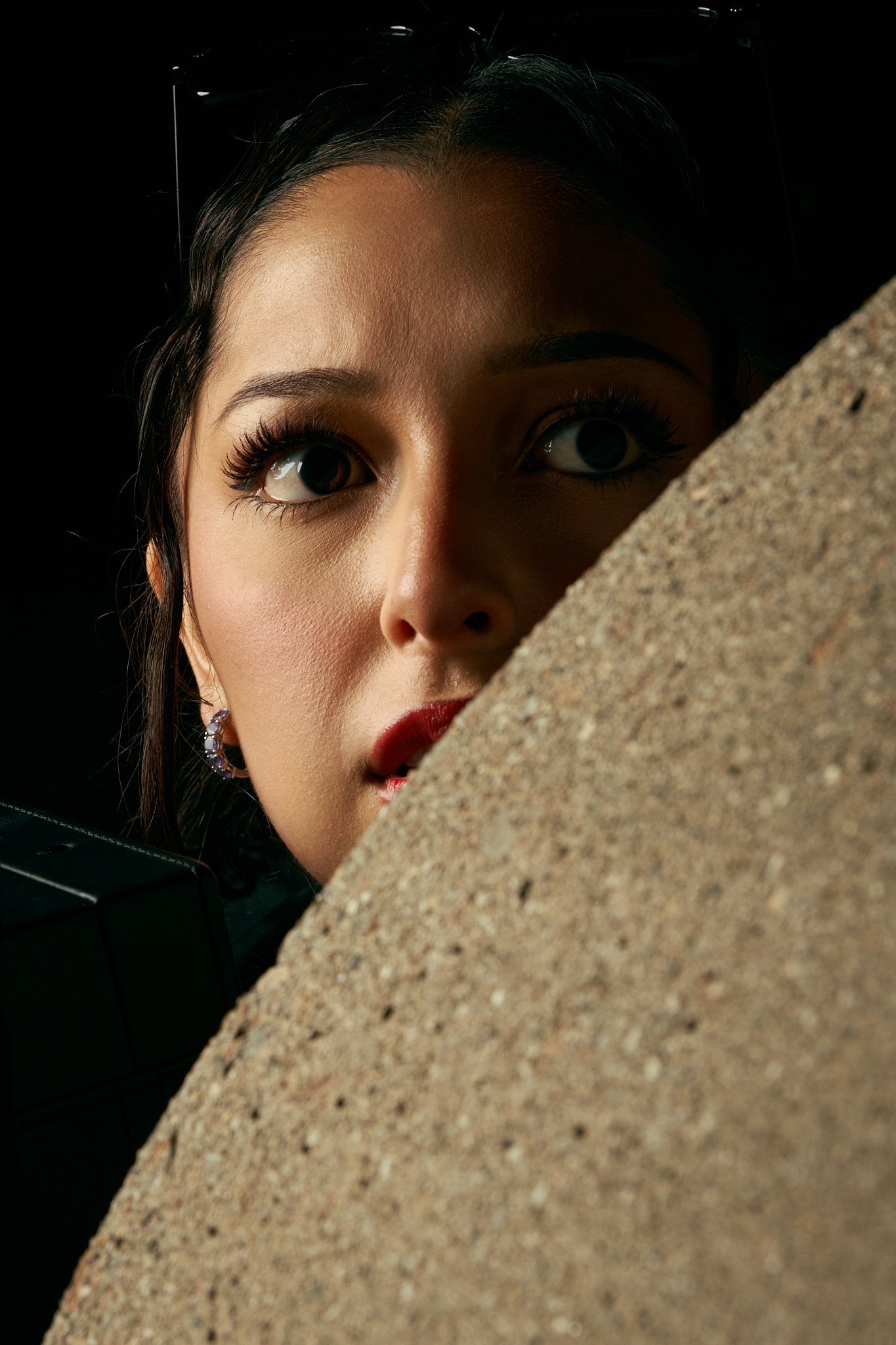
Placeholder — these three frames are the ones published for the series; which act each one sits in isn't recorded in my notes here, so I've labelled them by frame number rather than guess.
How it got made
This was a self-directed series, but it ran on exactly the process I'd run for a client — which is the point of showing it. The editorial process page has the full version.
The three-act shape and the closing line existed before the location scout. Everything downstream had something to be judged against.
Wardrobe — the red dress is doing structural work, not decorative work — locations across Los Angeles, and a running order so the acts could actually be shot.
Placeholder — shoot dates, crew and locations aren't documented in my source material for this concept.
Sequencing is where a narrative series is won or lost. The order is the edit; the individual frame matters less than what it's next to.
Processed and published as a complete series rather than as a set of singles.
Why this is the one I show
If you're hiring a photographer you want to know they can see. If you're hiring a writer you want to know they can structure. The Getaway is the only thing in my portfolio that answers both questions with one object, and it's why I don't treat the screenwriting and the photography as two careers I'm running in parallel.
If your project needs someone who can arrive with a story rather than wait to be handed one — a campaign with a narrative, a key-art set that has to imply a whole film, an editorial that's meant to say something — that's the work I want.